Research
We study what drives the innovation of essential epigenetic factors.
Our research program focuses on revealing when and how epigenetic factors change across evolution and what the influence of these changes are on fundamental biological processes. We combine evolutionary and phylogenetic analyses with molecular and cell biology, genetics, and genomics in multiple model organisms to uncover the causes and consequences of chromatin innovation and the surprising plasticity it displays across both evolution and disease.
Discovering chromatin innovations
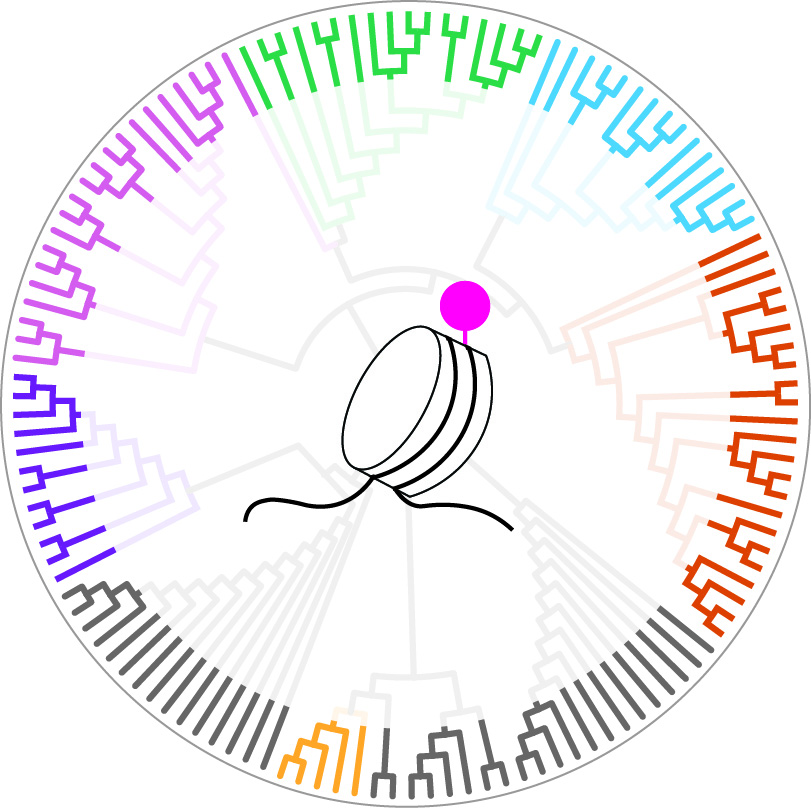
Eukaryotic histone repertoires are built from canonical histones (H2A, H2B, H3, and H4) and their variants. Although histones are among the most conserved proteins in biology, our work has repeatedly found the opposite pattern hiding in plain sight:
- Centromeric proteins in Caenorhabditis nematodes show an unusually high rate of evolutionary turnover, which we think reflects unique challenges posed by their holocentric chromosomes.
- Mammalian germ cells contain previously unrecognized H2B histone variants that turn over rapidly across evolution, including one variant that arose in vertebrates but was later lost in rodents.
- In on going work, we are studying H2A variant innovations in Diptera and fungi, using Drosophila and S. cereviseae as our lab models.
We are extending our evolutionary lens to other chromatin-associated proteins. For example, we analyzed EZHIP, a germ cell-specific inhibitor of the Polycomb Repressive Complex 2 and an onco-histone mimic, which shows dramatic divergence and is under positive selection. We hypothesize that these changes are potentially driven by parental genetic conflict during mammalian pregnancy. We are excited to continue to discover chromatin innovations across eukaryotic lineages to reveal the co-evolutionary landscape of the proteins that package and regulate the genome.
Functional consequences of chromatin innovation
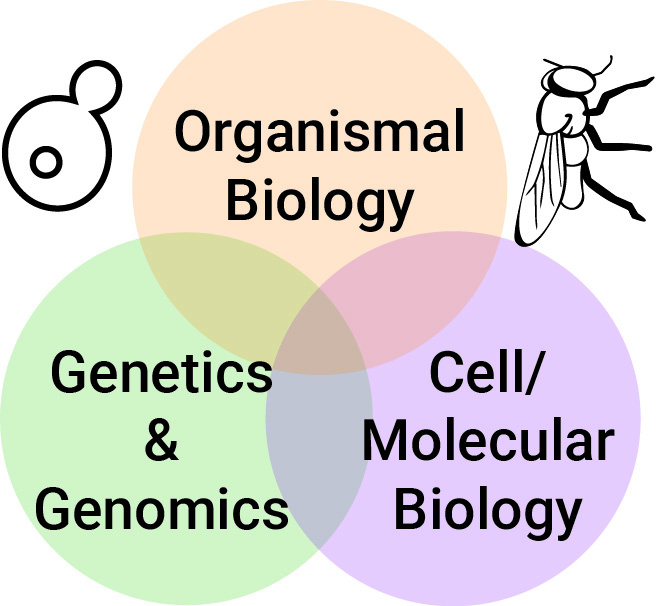
Discovery is only half the story! We also test what these evolutionary changes actually do. We engineer ancestor-like or different evolved states into budding yeast (S. cereviseae) and fruit fly (D. melanogaster) to assess their consequences. We assess effects from the organismal level (e.g., organismal fitness, growth, development, reproduction) to more molecular effects (e.g., DNA damage response, gene expression or changes to genome structure).
In the future, we will bring our evolutionary lens and tools to study the consequences of disease-associated chromatin mutations.
Interested in these questions? See our Publications, or get in touch.